About
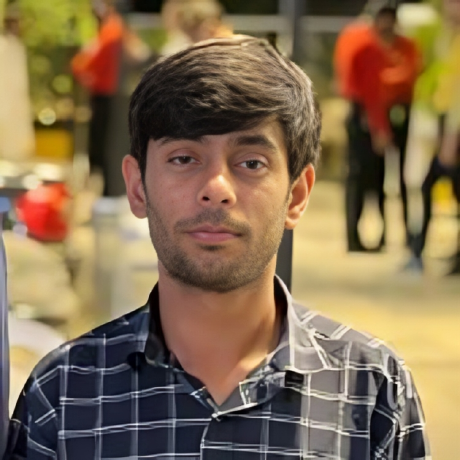
Welcome! I am a Machine Learning Engineer at Rezunate AI, where I design and deploy Computer Vision systems that solve real-world problems at scale. During my BSCS at FAST National University of Computer and Emerging Sciences, I worked as a Research Assistant across Computer Vision,Time Series Analysis, Natural Language Processing, and Recommendation System Projects, gaining a breadth of exposure that taught me how to move fluidly between research rigor and production engineering.
Research
My research interests span Computer Vision, Generative Models, Reinforcement Learning, and Robotics. I am especially drawn to the intersection of these fields, where perception, generation, learning, and decision-making converge to solve genuinely hard problems in AI. I believe the most meaningful breakthroughs happen at these seams, and that is where I aim to focus my work.
Most of my projects, research code, and open-source contributions live on GitHub. Feel free to explore, or reach out if something here sparks a conversation.
Education

Information Technology University (ITU), Lahore
Master of Science in Data Science
Coursework:
- Advanced Mathematics
- Machine Learning
- Tools and Techniques for Data Science

Lahore University of Management Sciences (LUMS), Lahore
Master of Science in Artificial Intelligence
Coursework: N/A
- Paused after one term to gain hands-on industry experience in applied ML before resuming graduate study.

National University of Computer and Emerging Sciences (FAST NUCES)
Bachelor of Science in Computer Science
Specialization:
- Artificial Intelligence
- Machine Learning
- Deep Learning
- Digital Image Processing
- Data Science
- Computer Vision
- Natural Language Processing
Experience

Rezunate AI
Machine Learning Engineer
November 2025 – Continue | Lahore, Pakistan (On-site)
- Developing computer vision systems using state-of-the-art architectures for image and video understanding and generation.
- Experience spanning segmentation, object detection, multi-object tracking, point tracking, video matting, depth estimation, and diffusion-based models.
- Building and optimizing end-to-end training and inference pipelines , including multi-GPU and distributed workloads for computationally intensive vision models.
OrbytLabs
Co-Founder | Machine Learning Engineer
June 2024 – November 2025 | Remote
- Developed a vehicle price prediction system, applying data validation, feature engineering, and model optimization. Iteratively improved the model to achieve 98% prediction accuracy, enabling accurate and reliable price estimations.
- Built object detection and tracking systems using YOLOv10/YOLOv11, integrating tracking algorithms for real-time visual understanding in smart security solutions. Applied post-training quantization (PTQ) and Quantization-Aware Training (QAT) to optimize model performance and ensure efficient, real-time inference on edge devices.
- Implemented intrusion detection systems by combining motion-based region analysis and AI-driven object localization to automatically detect and flag unauthorized entries or restricted zone violations in real time.
- Implemented OCR pipelines using Tesseract and EasyOCR to extract and structure information from scanned documents and ID cards, enabling automated data extraction and document digitization.
- Created and deployed LLM-based chatbots and document understanding systems using OpenAI, Claude, and Gemini APIs with RAG pipelines to automate customer support and business operations. Fine-tuned large language models (LLMs) for domain-specific use cases, enhancing contextual understanding, accuracy, and efficiency.
- Optimized deep learning pipelines using transfer learning, quantization, pruning, and model optimization techniques to improve accuracy and efficiency during experimental evaluations.
Deutics Global
Associate Machine Learning Engineer
Jan 2025 – July 2025 | Lahore, Pakistan (On-site)
- Developed and optimized a real-time video analytics system by converting RTSP streams to WebRTC for efficient live video processing and reduced latency.
- Implemented advanced tracking algorithms for real-time object tracking across frames, enabling movement monitoring and direction estimation.
- Built and integrated OCR pipelines using Tesseract, EasyOCR, and custom deep learning models to extract license plate numbers from images and video streams.
- Designed and optimized algorithms for wait time estimation, queue detection, speed calculation, and traffic light violation detection, along with advanced modules for eye state detection (drowsiness monitoring), seat belt detection, and driver attention monitoring to enhance traffic efficiency and enforce road safety regulations.
- Implemented line and zone intrusion detection systems to monitor restricted areas, strengthen surveillance, and enforce access control.

FAST NUCES
Research Assistant
Sep 2023 – Dec 2024 | Pakistan (On-site)
- Project: Personalized Recommendation System Development
- Developed a multi-class skin cancer classification system using the HAM10000 dataset to classify various types of skin lesions.
- Custom CNN achieved 92% accuracy, precision 92%, recall 92%, F1 score 92%.
- NasNet achieved 93% accuracy with precision 94%, recall 93%, F1 score 93%.
- ShuffleNet enhanced computational efficiency using grouped convolutions and channel shuffling; accuracy 87%, precision 87%, recall 87%, F1 score 87%.
- Optimized data pipelines and applied augmentation strategies to improve robustness and reduce over-fitting.

Anonymous Tree
Machine Learning Engineer (Intern)
Jun 2023 – Aug 2023 | Remote, Pakistan
- Project: Personalized Recommendation System Development
- Collected and processed user interaction data (e.g., purchases, ratings) along with item metadata (e.g., product categories, descriptions, attributes) to build a robust dataset. The data was cleaned, normalized, and structured for efficient use in model training. Additionally, techniques such as data imputation and feature scaling were implemented to handle missing values and enhance the accuracy and reliability of model predictions.
- Developed a content-based recommendation system utilizing item metadata (e.g., text-based features) to recommend similar products to users. Implemented collaborative filtering techniques such as user-based and item-based approaches combined both into a hybrid recommendation system for improved accuracy.
- Tuned hyper-parameters using Grid Search and Randomized Search for optimal performance. Evaluated models using Precision, Recall, F1 Score, and Mean Squared Error (MSE). Applied cross-validation to ensure generalization and prevent over-fitting.
- Integrated Matrix Factorization methods (e.g., SVD, KNN) for collaborative filtering. Utilized TF-IDF and Cosine Similarity for content-based filtering to identify similar items.
- Monitored real-time recommendation performance and ensured alignment with business goals. Incorporated user feedback into model retraining and improvement cycles. Analyzed system performance over time and tested new features for better accuracy.
Projects
I believe the best way to learn is by doing. I have completed many projects, and here is a list of the most notable ones in reverse chronological order. For more information, please visit GitHub.
Highlighted Projects
Skin Cancer Classification using NasNet and ShuffleNet
Dawood Sarfraz
Pytorch
[ Paper | Supplementary | Project | Bibtex | Code | Website | Video ]
Product Recommender System
[ Project Report | Code ]
Duplicate Question Pairs
Pytorch
[ Code ]
Text Generation using LSTMs
Python, NumPy, Pandas, TensorFlow, Keras
[ Code ]
Collaborative AI System for Task Research and Analysis
Python, Ollama, Llama 3.2, CrewAI, and Serper
[ Code ]
Stock Market Prediction using LSTM
Python, NumPy, Pandas, Keras, TensorFlow
[ Code ]
AI Research Assistant for Real-Time Information Discovery
Python, Ollama, Llama 3.2, CrewAI, and Serper
[ Code ]
Twittet Sentiment Analysis using Machine Learning
Python (version 3.7+), Pandas, NumPy, Scikit-learn, SVM, KNN, DT, XGBoost, Random Forest, Logistic Regression
[ Code ]
Text Classification using Classical NLP and RoBERTa
Dawood Sarfraz
Python, Tensorflow, RoBERTa, VADER lexicon, NLTK
[ Code ]
Intelligent Academic Assistant for Text and Image Tasks
Python, Llama 3.2 3B, LangChain, Streamlit, Ollama
[ Code ]
Smart Literature Review and Research Analysis Assistant
Python, RAG, Mistral 7B, Ollama
[ Code ]
Russian Language Sentiment Analysis
Python (version 3.7+), Pandas, NumPy, NLTK ('punkt', stopwords, SnowballStemmer), TfidfVectorizer, scikit-learn (MultinomialNB)
[ Code ]
Text, Image, Audio and Video Steganography
Python 3, OpenCV, NumPy, Matplotlib, ImageIO, SciPy, tqdm, pypng, wave, Linux
[ Code ]
Cyber Attacks Classification using Machine Learning
Dawood Sarfraz
Python (version 3.7+), Pandas, NumPy, Scikit-learn, SVM, KNN, DT, XGBoost, Random Forest, Logistic Regression
[ Project Report | Code ]
Pakistan Food Price Analysis
Python 3.7+, NumPy, Pandas, Matplotlib, Plotly, Seaborn, scikit-learn SVM, MLPRegressor, RandomForestRegressor, AdaBoostRegressor, DecisionTreeRegressor
[ Code ]
Mart Sales Prediction using XGBoost
Python (version 3.7+), Pandas, NumPy, Scikit-learn, XGBoost
[ Code ]
Gold Price Prediction using Random Forest Regressor
Python (version 3.7+), Pandas, NumPy, Scikit-learn
[ Code ]
Publications
List of papers is in reverse chronological order. For more information, please visit Google Scholar.
Papers
Skills
Full-Stack Web Technologies: HTML, CSS, Bootstrap, React, FastAPI, Django, Flask, Streamlit, Gradio
Tools & Platforms: Git, Docker, AWS, GCP, Azure, Linux
Databases & Vector Stores: MySQL, PostgreSQL, MongoDB, Redis, FAISS, Pinecone, Weaviate
ML/DL Frameworks: Scikit-learn, PyTorch, TensorFlow, Keras, YOLO, Hugging Face Transformers, OpenCV
NLP Libraries: spaCy, NLTK
Data Science & Visualization: NumPy, Pandas, SciPy, Matplotlib, Seaborn
Architectures & Models: Transformers, BERT, RoBERTa, Vision Transformers (ViTs), CLIP, CNNs, RNNs, LSTMs, GANs, Autoencoders
OCR & Document Processing: EasyOCR, Tesseract OCR
Generative AI Libraries & Tools: LangChain, LangGraph, LlamaIndex, CrewAI
Large Language Models: LLaMA, DeepSeek, Mistral, Falcon, Phi, Qwen, Granite, Gemma
Speech Models: Whisper
Techniques: Retrieval-Augmented Generation (RAG), Prompt Engineering, Fine-tuning, LoRA, QLoRA, Quantization, Model Distillation, PEFT
Miscellaneous
News
- X Y, 2025, News, “See Here”
Selected Talks
- X Y, 2025, Selected Talk “Watch Talk Here”
Blogs
- 3D Gaussian Splatting
- Transformers from Scratch
- Diffusion Models Explained
- Understanding RLHF
- Neural Radiance Fields (NeRF)
- Coming Soon
Notes
Machine Learning
- Linear Regression
- Classification
- Generative Learning Algorithms
- Kernel Methods
- Learning Theory
- Clustering
- Principal Component Analysis
- Independent Component Analysis
- Expectation Maximization Algorithm
- Gaussian Mixture Models
- Factor Analysis
- Variational Autoencoders
- Decision Trees
- Reinforcement Learning
Deep Learning
- Deep Feedforward Networks
- Regularization for Deep Learning
- Optimization for Training Deep Models
- Convolutional Networks
- Sequence Modeling: Recurrent and Recursive Nets
- Large-Scale Deep Learning
- Practical Methodology
- Autoencoders
- Representation Learning
- Deep Generative Models
Reinforcement Learning
- Introduction to Reinforcement Learning
- Markov Decision Processes
- Planning by Dynamic Programming
- Model-Free Prediction
- Model-Free Control
Deep Reinforcement Learning
Computer Vision
3D Computer Vision
- Structure from Motion (SfM)
- Multi-View Stereo (MVS)
- SLAM (Simultaneous Localization and Mapping)
- Monocular Depth Estimation (MiDaS, DPT)
- Stereo Depth Estimation
Generative Models
- Boltzmann Machines
- Restricted Boltzmann Machines
- Deep Belief Networks
- Deep Boltzmann Machines
- Boltzmann Machines for Real-Valued Data
Robotics
- Introduction
- Biomechanics of Walking and Running
- Robot Mechanisms: Kinematics and Dynamics
- Introduction to Diffusion Models
- The Human Hand and Dexterous Object Manipulation, Robot Hands
Natural Language Processing
- Text Preprocessing and Tokenization
- Bag of Words and TF-IDF
- Word Embeddings (Word2Vec, GloVe)
- Recurrent Neural Networks for NLP
- LSTM and GRU for NLP
TinyML and Efficient Deep Learning Computing
- Introduction
- Basics of Deep Learning
- Pruning and Sparsity (Part I)
- Pruning and Sparsity (Part II)
- Quantization (Part I)
Linear Algebra
- Linear Equation System
- Basic Matrix Algebra
- Determinant
- LU Factorization
- Vector Addition, Subtraction and Scalar Multiplication
- Linear Combination
- Linear Independence
- Vector Space and Subspace
- Basis and Dimension
- Null Space vs Col Space, Row Space and Rank
- Linear Transformation
- Eigenvalues and Eigenvectors
- Eigenvalue Decomposition
- Diagonalization
- Principal Component Analysis
- Applications to Dynamic System
- Inner Product and Orthogonality
- Gram-Schmidt Process and QR Decomposition
- Symmetric Matrices, Quadratic Form and Cholesky Decomposition
- Singular Value Decomposition
- Multivariate Normal Distribution
Calculus
- Functions and Limits
- Continuity
- Derivatives and Differentiation Rules
- Chain Rule
- Implicit Differentiation
Probability and Statistics
- Sample Spaces and Events
- Axioms of Probability
- Conditional Probability
- Bayes' Theorem
- Independence of Events
Numerical Optimization
- Introduction to Optimization
- Convexity and Convex Sets
- Unconstrained Optimization Basics
- Gradient Descent
- Line Search Methods
Workshops
- X Y, 2025, Workshops “Attend Workshop Here”
Tutorials
- X Y, 2025, Tutorials “Watch Tutorial Here”
Resources
- Aug 2, 2026,
C powers what AI, robotics, and embedded systems run on GPU kernels, firmware, real-time control, where speed and memory can’t be an afterthought. “Advance-C-Language.” - Jan 4, 2026
Gil Strang, MIT’s famous linear algebra professor, calls deep learning essentially applied linear algebra just matrices stacked in layers. Linear algebra is the math behind every model, vectors, matrices all of it. “Linear Algebra”